How did you get your current job, and what kind of work do you do in your role?
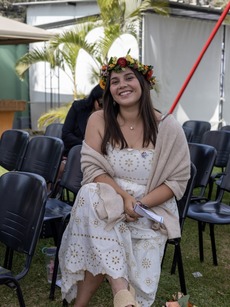
I obtained my current position through a standard online application and interview process. I currently live and work in a small community in the La Libertad region of Peru, where I serve as an Economic Development Facilitator.
In this role, I lead three primary initiatives: youth entrepreneurship, financial education and community savings groups, and women's economic empowerment. My work involves mentoring secondary school students as they develop business projects, promoting financial literacy and supporting community-based savings groups, and creating opportunities that strengthen women's economic participation and independence.
I work closely with grassroots organizations, local schools, and community members to design and implement programs that foster sustainable economic development and build local capacity.
What advice would you give to Applied Humanities students as they approach graduation?
My advice to Applied Humanities students as they approach graduation is to embrace the perspective your education has given you. One of the greatest strengths of an Applied Humanities background is the ability to see the human side of every challenge. We don't just see statistics—we see stories. We don't just see projects—we see people.
Carry that perspective with you as you begin your job search and career. It is a valuable strength that sets you apart. Seek opportunities that align with your values and allow you to make a meaningful impact.
From my experience working in the field as an economic development volunteer, I've learned that the most successful people are not always the most creative, the most ambitious, or even the most intelligent. They are the ones with the greatest tolerance—tolerance for change, uncertainty, discomfort, difficult conversations, language barriers, and the unexpected challenges that come with working alongside communities. That kind of tolerance allows you to remain present, adaptable, and committed when things don't go according to plan.
The real skill is perseverance: the ability to stay curious when progress feels slow or even futile. Your career path will not always be straightforward, and that's okay. Some of the most meaningful growth comes from the blind spots, detours, and hidden gems you never could have planned for. Stay open to those experiences, trust the process, and let your humanity guide the work you choose to do.